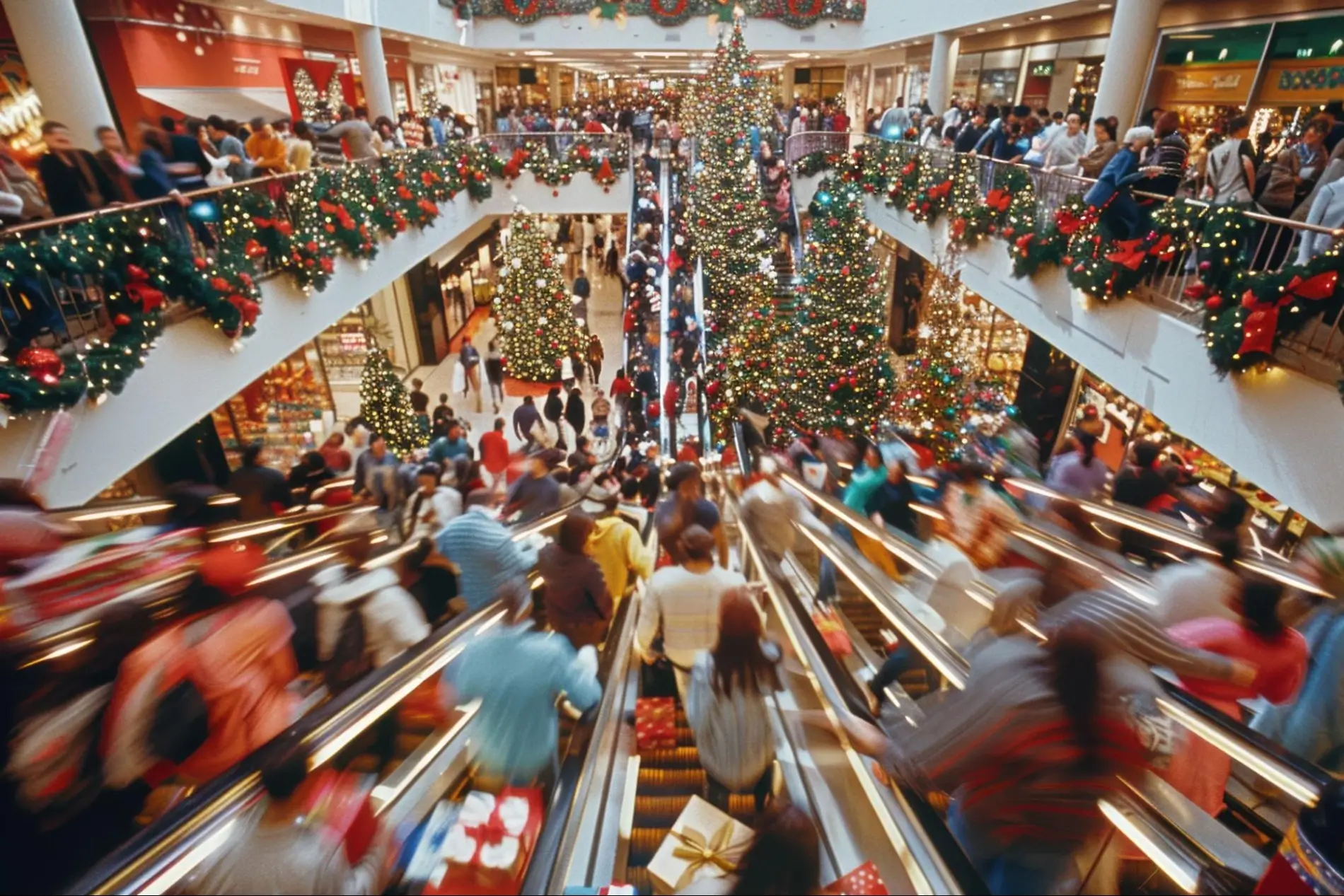





With an abundance of stores containing high-value merchandise, shopping centers are a prime target for criminals.
Due to their large layouts, high foot traffic, and extensive retailers-related data, these premises face a wide range of physical and cyber security threats. They include theft and shoplifting, vandalism, insider theft, parking lot crime, terrorism, emergencies, data breaches, and online payment fraud. Even when shopping centers are secured, customers who feel unsafe or perceive danger will exhibit avoidant behavior and steer clear of the premises.
With these vulnerabilities, business owners must take steps to secure their property and provide a sense of safety for employees and customers.
Shopping Center Retail Theft vs Shoplifting
Merchandise theft is one of the most common crimes that threaten shopping centers and can be separated into two distinct acts: shoplifting and retail theft.
Shoplifting
Shoplifting is typically done by a single person and relies on seizing opportunities or acting on impulses.
Shoplifters may not plan this act, making it a more random and less organized event. Shoplifting usually involves taking a few low-value items, but since it is a highly common crime, over time, it can incur substantial losses for businesses.
How to prevent
- Minimize blind spots in store layouts, preventing shoplifters from seizing opportunities to steal undetected.
- Display anti-theft signs that may discourage shoplifters, as they’ll be aware that their actions may have serious consequences.
- Limit changing room items in clothing stores to prevent shoplifters from taking and concealing merchandise.
Retail Theft
Retail theft, otherwise known as organized retail crime, is a planned act that several individuals execute to steal merchandise and resell it on black markets or use it in other criminal activities.
Unlike shoplifting, retail theft is not opportunistic and instead is highly methodical and coordinated. Retail theft criminals will steal high-value items and will often target specific goods even before arriving at the store’s location.
Some group members may cause distractions to divert the attention of store employees, while others use bags and clothing to steal large quantities of items. Retail theft can also involve group members rapidly entering a store to grab merchandise and leaving immediately, giving little opportunity for employees to take action.
How to prevent
- Train staff members to identify signs of retail theft and take the appropriate action to minimize losses while staying safe.
- Participate in retail crime prevention networks to stay informed about regional theft trends and suspects.
- Educate customers about the impact of retail theft and encourage them to report suspicious activities to employees or security personnel.
The Top Shopping Center Security Solutions
Shoplifting and retail theft, among other common security threats, such as vandalism, unauthorized access, and property damage, continue to impact shopping centers across the country. Fortunately, steps can be taken to reduce the occurrence of these threats and ensure the safety of employees and customers.
Explore these top four shopping center security solutions to find out how to protect your premises.
1. Surveillance Cameras
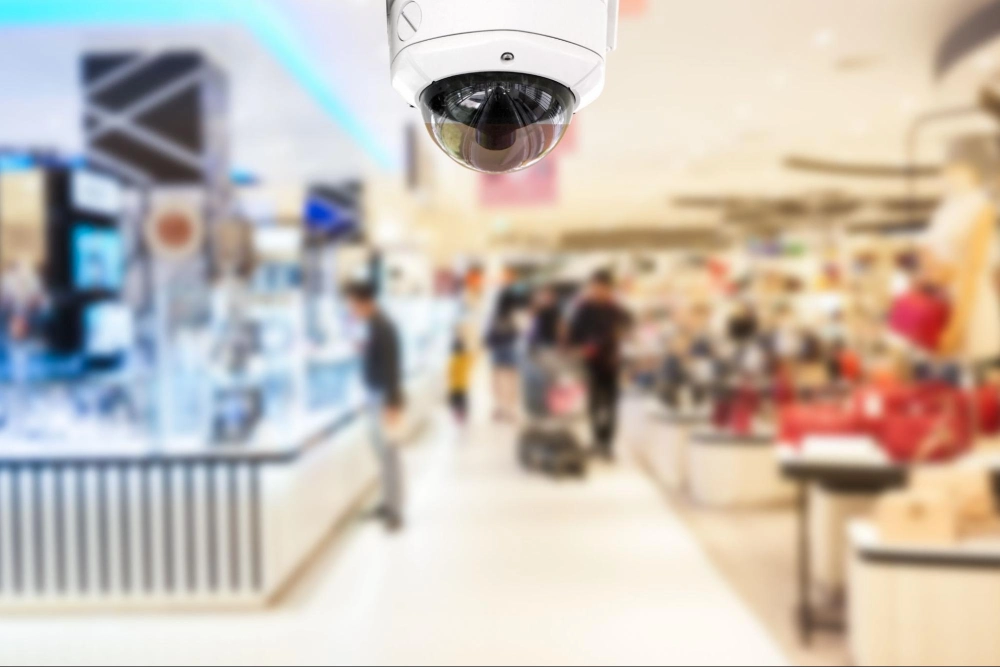
Installing surveillance cameras is the first step towards securing a business’s premises and preventing crime. Cameras capture suspicious or illegal activities and allow on-site personnel or local authorities to respond. They’re also an effective deterrent against undesirable acts.
When potential shoplifters or other criminals know they’re being monitored and their actions are recorded, they may be discouraged from stealing merchandise, damaging property, or attempting to access restricted areas.
Surveillance cameras can also aid investigations by providing footage of illegal acts, helping law enforcement hold offenders accountable, and further reducing crime on the premises.
Types of Security Cameras
The main types of security cameras that are most commonly used in shopping centers include:
- Bullet Cameras: These long, cylindrical cameras are optimal for long-distance surveillance, such as in outdoor areas or at the beginning of long corridors, and are usually mounted on walls.
- Dome Cameras: With a transparent, dome-shaped casing, dome cameras have a constant view of almost 360 degrees to monitor the surrounding area in high quality. These cameras are typically mounted on ceilings.
- PTZ Cameras: Pan-tilt-zoom cameras can be remotely controlled to adjust their view and maintain surveillance of individuals’ suspicious activities even as they move throughout different areas. They can be mounted on both ceilings and walls.
Business owners can install a selection of different camera types to make sure that every vulnerable or sensitive area of the shopping center is being monitored.
All cameras can also be remotely controlled by on-site security personnel or overseen by a monitoring and response team that can identify and verify suspicious activity and take the appropriate action, such as alerting law enforcement.
2. Security Guards
As trained professionals well-versed in vital de-escalation and conflict resolution skills, security guards can be stationed in a shopping center to deter criminal acts and maintain order throughout the premises.
Typically, guards will be stationed at storefronts, entrances/exits, food courts, loading docks, information desks, and entertainment areas.
Duties of Security Guards
The most common duties of posted security guards include:
- Monitoring surveillance systems
- Responding to security incidents
- Documenting incidents
- Managing crowds
- Enforcing premise policies
- Assisting during emergency evacuations
- Collaborating with authorities
In larger shopping centers across L.A. and other busy cities, several security guard patrols may be conducted in assigned areas throughout the premises, such as around food courts, across the building’s exterior, in storage and loading areas, or nearby high-risk stores.
Security guards can also offer customer assistance services to create a welcoming environment. Services can include carrying maps to direct customers to specific locations or being equipped with knowledge about the shopping center to provide information on stores, services, and amenities.
3. Electronic Access Control
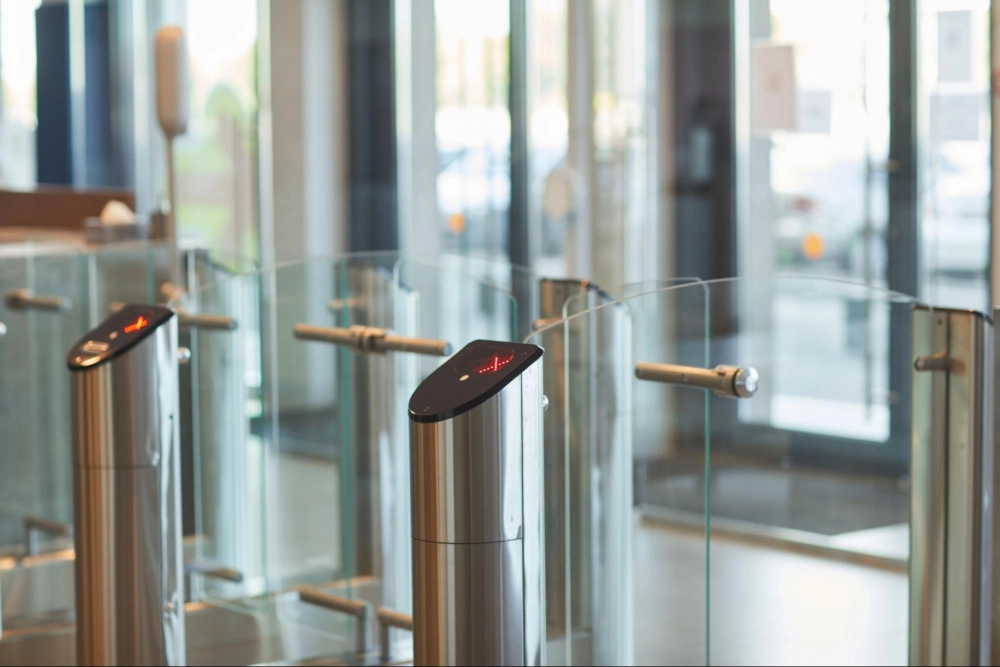
While traditional access control often involves physical keys, locks, and manual monitoring, electronic access control utilizes advanced technology to automatically grant and restrict access.
Through installed electronic access control systems, access can be managed through credentials such as:
- Key cards
- Fobs
- Pin codes
- Mobile apps
- Biometric data (facial or fingerprint)
On-site security personnel can oversee these systems and grant temporary access to authorized individuals as needed.
Similarly, access can be immediately revoked, or the entire system can be disabled in the event of emergencies, such as fires, to facilitate evacuation procedures and give emergency responders unrestricted access.
If unauthorized access is attempted, the system will automatically inform security personnel who can attend the location and intervene if necessary.
Through this system, businesses can control access without needing to employ additional personnel and ensure that specific areas in the shopping center are protected against unauthorized access, even during non-business hours.
4. Intrusion Detection
Intrusion detection systems operate continuously to alert personnel whenever there’s a breach in the shopping center’s premises. While security guards provide oversight during operational hours, criminals may attempt break-ins to steal merchandise from unattended areas during late or early hours.
The primary features of intrusion detection systems include:
- Door and window sensors are installed to detect unauthorized entry or break-ins.
- Glass break sensors can recognize the sound frequencies associated with breaking glass.
- Motion sensors detect movements within designated areas and trigger alerts if unauthorized activity is detected outside of regular operating hours.
- Alarms can be activated to serve as a deterrent and notify personnel of potential intruders.
Intrusion detection systems, although most effective when combined with other security solutions, support the immediate detection of criminal acts such as trespassing and ensure a rapid response.
When the sensors are triggered, they send alerts, allowing action to be taken as quickly as possible to mitigate damage or losses in shopping centers.
Additional Shopping Center Security Tips
With these additional security and safety tips, you can go the extra mile to protect your property and the well-being of everyone on your premises.
Integrate AI-Powered Security Solutions
Many businesses are now turning to artificial intelligence to optimize security measures and improve surveillance capabilities.
In a busy shopping center, AI can use facial recognition to detect a person repeatedly entering and exiting the same store without making a purchase, or a group of individuals lingering near high-value merchandise. AI also detects vocal cues indicating distress, aggression, or other potential safety risks. Systems will then alert security personnel, who can respond proactively and navigate to specific areas to assess the situation and take further action.
Some security providers, including American Security Force, ultilize AI technology such as Ajar.ai to support their security operations and provide clients with real-time insights that help detect suspicious behavior and contain security incidents before they can escalate.
For example, sentinel surveillance towers are particularly effective for AI-powered security due to their extended height and 360° coverage, which enables wide areas to be monitored simultaneously. Combining the sentinel’s surveillance capabilities with AI enables faster identification of potential threats compared to security systems consisting solely of fixed cameras, providing more visible and reliable security across large premises such as shopping centers.
Secure Parking Areas
Shopping center parking lots are highly vulnerable areas to car theft, damage, and assault, leaving customers feeling uneasy and even jeopardizing their safety.
To protect both customers and employees as they enter and leave your shopping center’s parking lot, you should extend your security measures to this area, such as security guard patrols and surveillance cameras.
Additional safety measures can also be integrated to ensure parking lot safety, such as the installation of pedestrian walkways, bright lighting fixtures, and regular maintenance programs.
Prepare for Busy Seasons
During holidays and busy seasons, shopping center security risks are more prominent, as criminals often take advantage of busy areas to participate in illegal activities. Prepare for this potential rise in crime and other threats by increasing the presence of security measures.
For instance, additional security guards can be assigned to posts or on patrols, while temporary access control systems can be set up to manage crowd flow and prevent unauthorized entry into restricted areas.
As busy seasons or special events end, you can scale back the heightened security measures and proceed with standard solutions that fit within your business’s annual budget.
Train Store Employees
Store employees in shopping malls are often underutilized regarding security issues, but with the correct training, they can play a vital role in deterring and managing threats.
Employees should be trained to actively observe their surroundings and encouraged to look for unusual behavior or non-verbal cues such as nervousness, avoidance of eye contact, excessive browsing without purchasing, or attempts to conceal items.
Store employees should also receive additional training to ensure they know how to:
- Respond to security threats
- Recognize the signs of shoplifting
- React during emergency situations
- Inform other staff members
- Report a potential security incident to security personnel
- Accurately document any suspicious or unusual behavior
Ensure Peace and Order at Your Shopping Center With American Security Force
At American Security Force, we provide tailored shopping center security solutions to keep your property in order. After conducting a risk assessment, where we analyze vulnerable locations, high-traffic areas, and potential security risks, we come up with a plan that suits your needs, considers your preferences, and sticks to your budget.
Our comprehensive security solutions can be customized to fit the specific requirements of your premises. So, if you’re ready to step up security in your shopping center, contact us today to get more information or receive a free quote for our services.