



As technology accelerates, security systems aren’t just recording; they’re interpreting and reacting. Consequently, AI in security and surveillance has become prevalent across commercial solutions, guiding decisions the moment risk appears.
As an experienced security service provider, we’re here to break down the practical gains of AI-powered surveillance tech, from mobile trailers and drones to sentinel towers and access control.
AI-Powered Security: From Motion to Meaning
Traditional motion detection treats any pixel change as an alarm. Wind, shadows, and small animals flood teams with noise, undermining effectiveness. AI in security and surveillance interprets the scene, classifying people, vehicles, and behaviors. This way, alerts carry context, not just movement. That shift from motion to meaning is a core leap.
What changes with AI:
- Classification over motion: detect people/vehicles/behaviors, not just pixels moving.
- Edge analytics: fast, resilient detections even if connectivity dips.
- Orchestration: devices hand off events: one detects, another verifies, a third deters.
In the following paragraphs, we will look at how various surveillance solutions get upgraded by AI features.
AI in Mobile Trailers: Security on the Edge
Core AI Capabilities
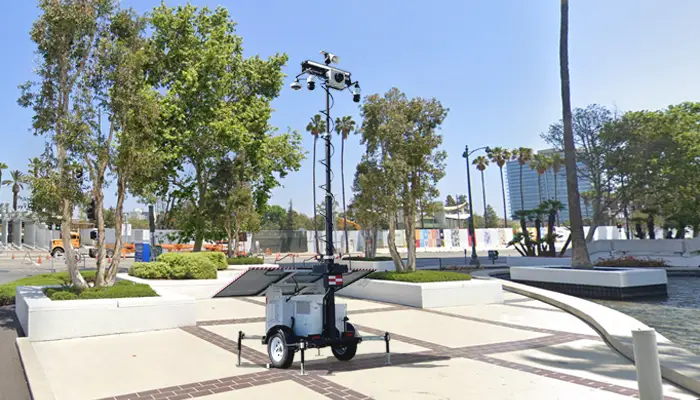
Modern mobile surveillance trailers run analytics directly on cameras or a compact onboard computer. They classify people and vehicles, draw virtual tripwires, and use loitering or dwell detection to surface intent rather than random motion. PTZ auto-tracking can snap to a target for close-ups, improving identification and evidentiary value.
Typical capabilities:
- Person/vehicle detection & virtual tripwires: AI cameras distinguish people from vehicles and when a person or car crosses invisible lines or zones (virtual “tripwires”), the system flags it as an important activity.
- Loitering/dwell cues: The system flags when someone lingers too long in a specific area, signaling possible intent.
- PTZ auto-tracking: A PTZ camera auto pans, tilts, and zooms to follow a subject, capturing clearer faces and plates.
- Configurable rules: Set rules by time, area, and sensitivity so alerts fit site routines and cut nuisance alarms.
Smarter Deterrence & Verification
Deterrence works best when it is immediate and visible. When analytics confirm a person or vehicle breaching a defined zone, trailers can trigger strobes, sirens, and pre-recorded voice-down messages within seconds. Verification closes the loop with short clips sent to operators for rapid decision-making.
How the loop closes:
- Instant deterrence: lights, sirens, and voice-downs on confirmed events.
- Verification clips: short videos and snapshots for fast review.
- Operator efficiency: fewer false alarms; focus shifts to verified incidents.
Best Commercial Fits
Mobile trailers excel where layouts change and risks shift. Active construction, logistics yards, overflow parking, and temporary events are among the top places to use mobile surveillance trailers. Their combination of height, visibility, lighting, loudspeakers, and AI analytics provides both deterrence and documentation. For placement inspiration across industries, see.
AI-Powered Security Drones (And Remote Docking)
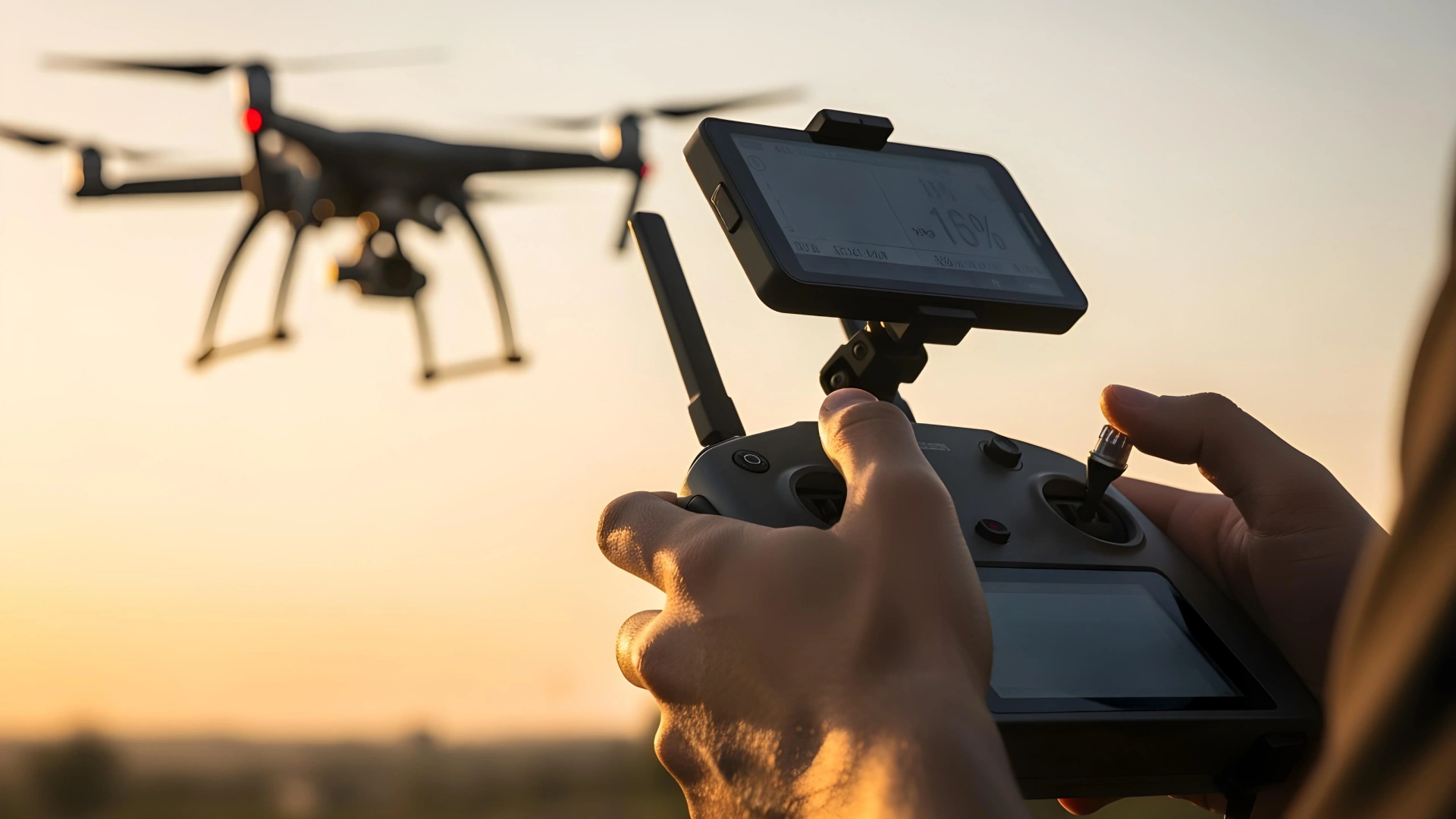
Security drones add fast, flexible coverage above roofs, fence lines, and remote corners that fixed cameras can’t always see. With AI in the mix, surveillance drones can plan routes, avoid obstacles, and verify alerts in real time, and return to dock for automated charging.
Autonomy & Navigation
Scheduled patrols and alarm-triggered flights enable aerial coverage on demand. Drones constantly need to navigate safely around buildings, lines, and trees. That’s where features like obstacle awareness and route planning come into play.
Autonomy essentials:
- Scheduled patrols and alarm-triggered launches.
- Obstacle avoidance and safe routing at speed.
- Precision landings into weatherized docks for automated charging.
Intelligent Detection From Above
Aerial analytics extend what ground systems can see. Just like AI-powered surveillance cameras on trailers, onboard models distinguish people, vehicles, and unusual motion patterns. Backed up by thermal imaging, they also work in low-light situations. In addition, supervisors receive live feeds and clipped highlights from flights over roofs, fence lines, yards, and access roads.
Event-Driven Dispatch
The real efficiency comes when systems cooperate. If a trailer or fixed camera detects after-hours movement, the platform can auto-launch a drone to the coordinates. Operators then watch a stabilized aerial view while the ground device maintains deterrence with lights and voice-down.
Agentic monitoring platforms, such as Anava.ai, can analyze live feeds, trigger auto-launch from a docked drone for verification, and coordinate real-time talk-down, closing the loop between ground alerts and aerial response.
Commercial Use Cases
Common wins include perimeter sweeps on campuses, after-hours yard checks for dealerships or distribution centers, and incident recon where vehicles cannot safely drive. Together, drones and ground units create layered AI-powered security, with proven industry use cases across construction, logistics, and campus environments.
High-value scenarios:
- Campus perimeters and remote corners.
- After-hours yards with high theft pressure.
- Roof/facade checks after sensor alerts.
Sentinel Surveillance Towers: 360° AI Guardians
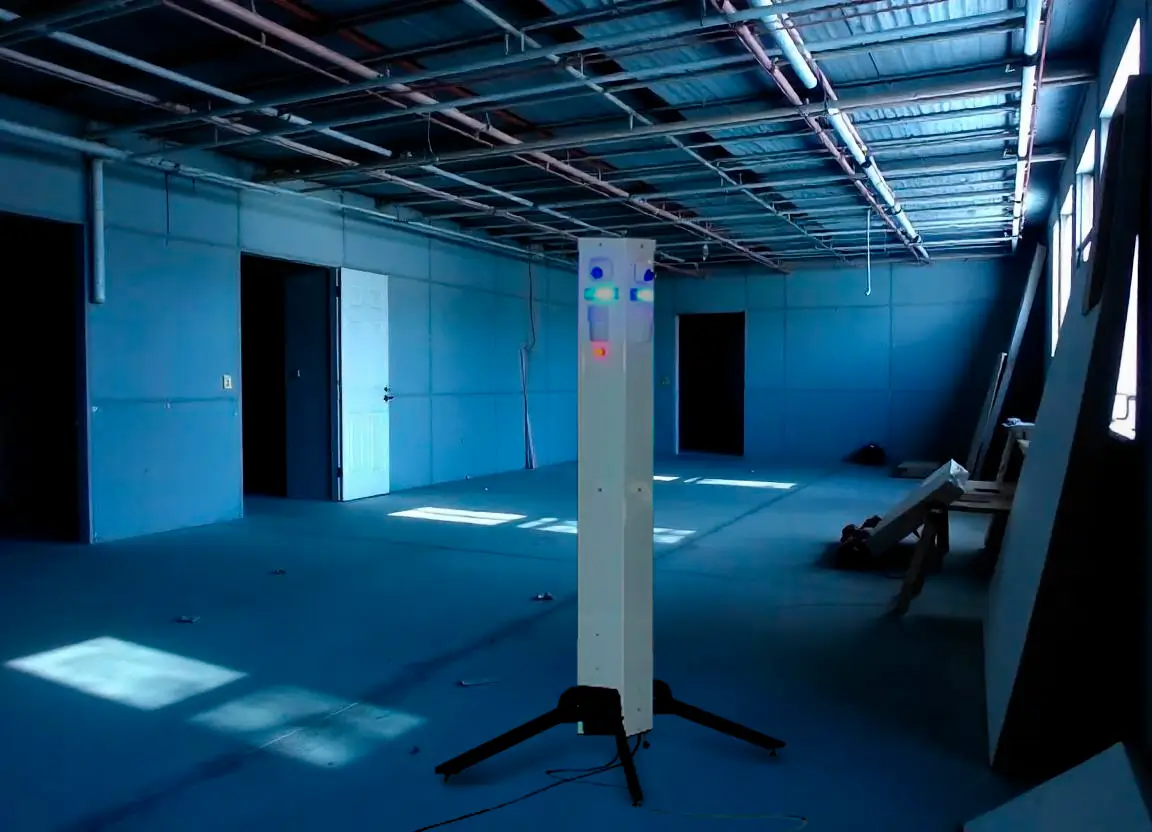
Sentinel towers bundle many of the most impactful AI capabilities for fixed sites. However, adoption still lags more familiar options because towers are a specialized solution for fixed, high-visibility locations.
Core AI Capabilities
Sentinel towers fuse 360° video, PIR sensing, and time/zone context to judge intent in seconds, not just detect motion. The analytics score risk and map it to rule stacks (after-hours, gate, staging zone). Sentinels can auto-select the right response: lights, siren, or voice-down. All this while pushing a pre-buffered clip to operators for one-tap verification.
Autonomous Response
When AI confirms a person in a restricted area, the tower escalates automatically. It can flash strobes, play warnings, and capture snapshots or short clips for monitoring. Deterrence and documentation happen in the same moment. This capability makes incidents shorter and easier to review later.
Response sequence:
- Detect → Deter: lights/sirens/voice-down trigger immediately.
- Document: snapshots/clips stored and shared for review.
- Dispatch: operators escalate only when needed.
Where Sentinels Shine
Sentinels complement trailers and drones by anchoring coverage in places where you want constant presence. When you have sites that prohibit permanent installs but need visible presence, opting for sentinel surveillance services gives you access to specialized AI capabilities in security and surveillance.
Ideal placements:
- Gatehouses & entries with frequent foot/vehicle traffic.
- Retail frontages facing lots and sidewalks.
- Staging zones where tools and materials concentrate.
Access Control Devices: Use of AI in Security and Surveillance at the Door
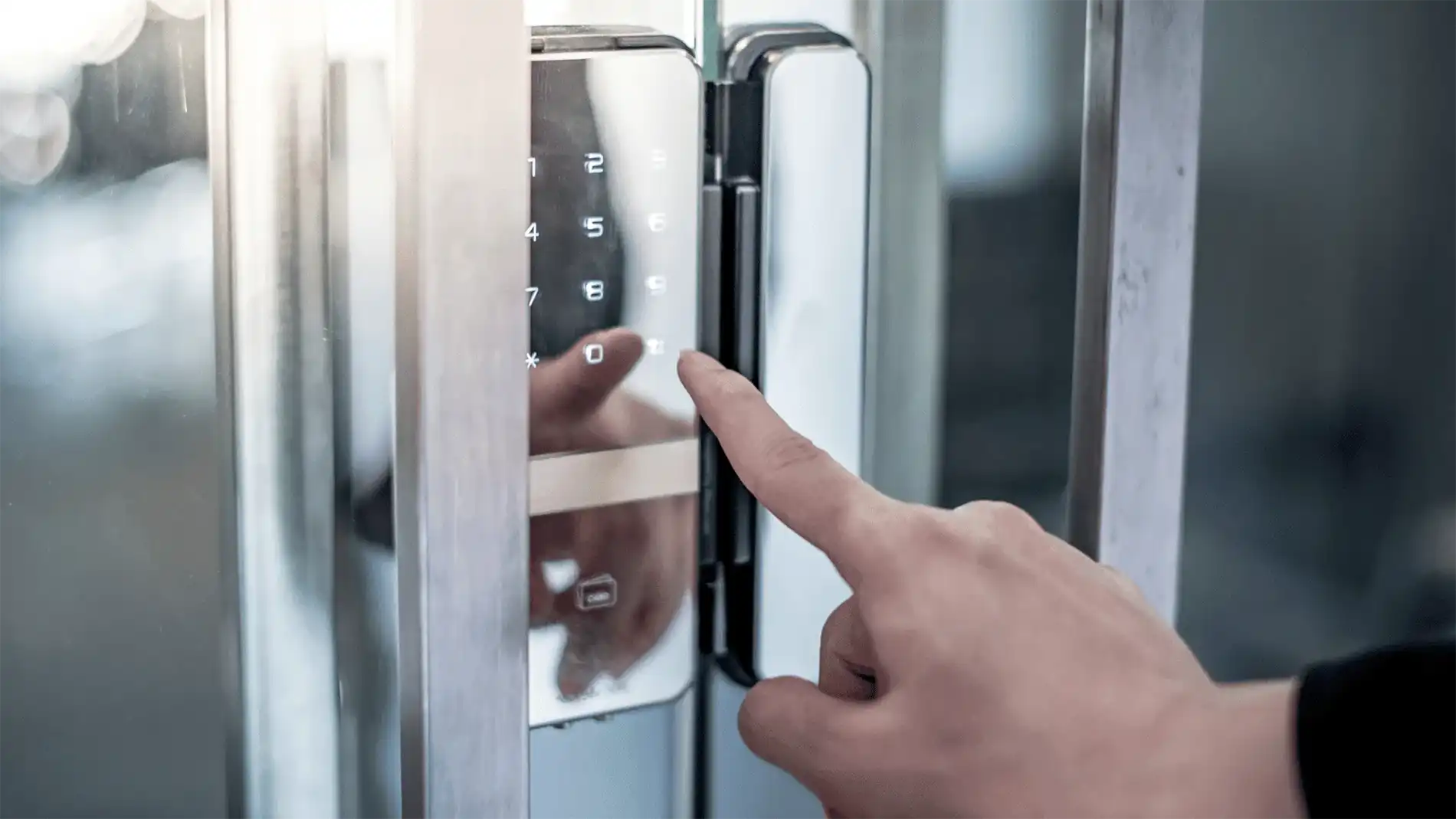
Frictionless, Verified Entry
That final meter in a security plan comes down to access control. Authorized entry is at the core of it, so this is where AI-powered security features help the most. Here are some of them.
AI-enabled door-level upgrades:
- Face authentication with anti-spoofing/liveness.
- Tailgating detection to enforce one-person, one-credential.
- Role-aware access for contractors and shift changes.
Behavior & Anomaly Cues
AI helps access systems learn what normal looks like across roles, doors, and time ranges. Off-hours attempts, repeated denials, or access from unusual locations can trigger step-up verification or alerts. Pairing these signals with nearby cameras gives operators instant visual context.
Smart Detection Signals
- Time anomalies: after-hours or holiday entries.
- Pattern anomalies: repeated denials at the same door.
- Location anomalies: unusual building or entrance for a user.
Practical Integrations
Access events become more actionable when they coordinate with surveillance. A forced-door alert can cue a sentinel to speak down or a trailer to pan and zoom for identification. If the situation escalates, a drone can launch to provide overhead verification for responders.
Tight integrations:
- Door → camera clip for immediate context.
- Door → tower talk-down for live deterrence.
- Door → drone dispatch for rapid recon.
What Are the Challenges and Opportunities Presented by AI in Security and Surveillance?
Opportunities
The strongest advantage is proactive deterrence paired with clear verification. Lights, sirens, and voice-downs start immediately, while short clips confirm what happened and where. Teams move from constant monitoring to exception handling, which improves focus and coverage.
Operational wins:
- Faster response with fewer blind spots.
- Lower noise via false-alarm filtering.
- Scalable coverage that moves as sites evolve.
Challenges
As powerful as AI systems can be, they still depend on fundamentals like camera placement, lighting, and masking to perform well. Outdoor environments add complexity with weather, occlusion, and seasonal changes. This makes tuning and periodic reviews essential.
What to manage:
- Environment: lighting, angles, distances, and occlusions.
- Integration: clean hand-offs across platforms and teams.
- Upkeep: health monitoring and periodic model updates.
Conclusion
AI in security and surveillance has shifted systems from passive recording to real-time decisions. We’ve covered practical gains across mobile surveillance trailers, drones, sentinel towers, and access control.
The goal is simple: reduce blind spots and speed up response without overloading staff. AI helps security teams verify and act on the few events that matter, rather than watch every feed.
If you are interested in integrating AI-powered security solutions in your premises, contact the experts at American Security Force to get a site-specific plan: precise, reliable, and ready for real-world conditions.