



When cold, hot, windy, or foggy conditions set in, businesses’ security systems can be disrupted. Electronics may suffer permanent damage, physical barriers can deteriorate, and security personnel might become fatigued.
Although weather can cause challenges, with careful planning and preparation, businesses can maintain strong security coverage to continue protecting their property and staff members.
How Weather Impacts Businesses’ Security Measures
Certain types of businesses are particularly affected by weather, including:
- Construction sites
- Outdoor storage facilities
- Warehouses
- Parking lots
- Logistics hubs
However, nearly every business with outdoor equipment, cameras, or access points can be impacted by snow, ice, heavy rain, high temperatures, or strong winds.
Here’s how even minimal exposure to the elements can create risks for security, equipment functionality, and personnel safety:
Cold Weather Disrupts Daily Security
When temperatures drop, snow and ice can cause significant damage and disruption to your business’s daily operations.
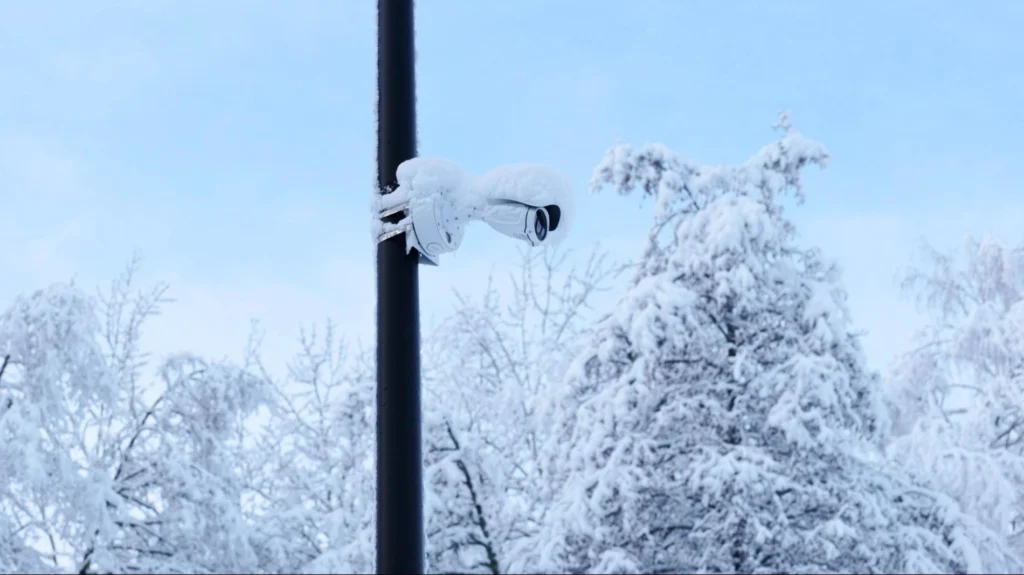
Electronic systems are especially vulnerable in cold weather. Batteries drain more quickly on devices like drones and radios, while condensation from melting snow or sudden temperature changes can short-circuit wiring, reducing the reliability of critical security equipment, such as cameras and motion sensors.
Wet Conditions Weaken Perimeters
Heavy rain and pooling water can create softened soil that shifts the position of fencing and gate posts, creating small gaps in perimeter security that could be exposed by intruders.
Some sites may also be prone to flooding due to poor drainage or blocked stormwater systems, and this can cause water to accumulate around gates, electrical systems, and storage areas, damaging equipment and increasing the risk of unauthorized access and theft.
Strong Winds Disturb Security Systems
High winds interfere with fixed and temporary security installations. It can tilt or shake cameras, or it can kick up dust that reduces visibility, giving you unreliable surveillance footage.
Temporary fencing or construction barriers can collapse or slide out of place in extremely windy weather, which leaves areas exposed and forces your team to spend time resetting equipment instead of monitoring activity.
High Heat Reduces Security Performance
When temperatures rise in the summer months, cameras can shut down, sensors may fail, and other monitoring systems can experience intermittent faults during peak heat hours.
Battery-powered devices, like drones or access control components, can also overheat, causing system failures.
Seasonal Shifts Change Security Workflows
Security guards, while a valuable addition to any business’s defenses, are impacted by various weather conditions.
Hot temperatures burden security personnel with increased physical strain. Long hours under direct sunlight lead to faster fatigue, slower reaction times, and reduced alertness during patrols and other outdoor duties. Staff may need more frequent breaks, shaded or ventilated posts, cooler uniform options, and adjusted patrol schedules to stay focused and energized throughout their shifts.
Cold temperatures can make it harder for guards to notice and respond to potential threats. During icy weather, personnel move more cautiously and cover less ground during patrols, while heavy snow reduces their visibility. Extended shifts in cold weather can also lead to discomfort and a drop in focus, which compromises situational awareness. Guards may need warmer clothing and additional protective gear in colder weather, such as thick gloves and slip-resistant footwear.
Weather Impact on Electronic Security Infrastructure
Elerontic security measures are often the first to be impacted by temperature and weather changes:
- Low temperatures can cause batteries in electronic systems to lose power faster.
- Moisture can seep into keypads, card readers, or electronic locks, causing short circuits or corrosion.
- Low temperatures can obscure camera lenses with fog or mist, and they may need to be manually cleaned.
- Rain and snow distort the camera’s view across large areas, making it harder to pick up potential intrusions.
- Rain or condensation can seep into alarm housings, corroding circuit boards or connections and potentially triggering false alarms.
- Temperature swings can affect sensor accuracy, and alarm systems may fail to detect activity.
Adapting Security Measures for Weather Resilience
Businesses must stay proactive before, during, and after extreme weather to maintain the effectiveness of their on-site security.
Here’s how your facility can reduce the risk of system failures and ensure personnel can operate efficiently even under harsh conditions:
Material and Equipment Upgrades
- Use weather-resistant housings: Protect camera lenses and other electronics, such as keypads and electronic locks, from ice and condensation with plastic enclosures that can seal out moisture during cold weather.
- Choose weather-resistant fencing materials: Replace vulnerable primers with high-quality materials. For example, vinyl fencing is highly resistant to moisture, making it suitable for rainy or high-humidity areas, while steel fencing is a strong, durable material that can withstand high winds and drastic temperature changes.
- Reinforce posts and anchors: Secure fence posts with concrete footings or steel brackets to increase resistance against heavy winds.
- Deploy mobile surveillance trailers: Position mobile security trailers on elevated or open ground to avoid snowdrifts and glare from bright sunlight. Due to their tall masts, these trailers can cover blind spots left by blocked or offline fixed cameras.
Staff Training and Personnel Management
- Train for icy conditions: Make sure security personnel know how to safely navigate slippery walkways and adjust patrols to minimize slip and fall risks.
- Adjust shifts for cold exposure: Modify security guard schedules to limit prolonged outdoor exposure, and rotate personnel more frequently to reduce their discomfort or fatigue. In longer weeks of extreme cold or warm weather, businesses may benefit from increasing the number of security guards deployed at their site.
- Perform equipment checks: Regularly inspect radios, battery-powered devices, and handheld systems to ensure all tools remain operational in low temperatures.
Emergency Response and Weather Predictability for Security Plans
- Integrate weather forecasts into emergency plans: Monitor daily forecasts to track predicted snowfall and temperature swings, and update security patrol routes and equipment checks accordingly.
- Perform pre-storm site-securing tasks: Secure materials, reinforce gates and fences, and inspect camera housings for vulnerabilities before severe weather is due to occur.
- Assess weak points on site: Walk your site regularly to check terrain, drainage, elevation, sightlines, and camera placement. Identify areas that can be most affected during storms, snow, or ice, and determine which steps to take.
Maintaining Robust Security All Year Round
Planning for severe weather is an ongoing responsibility for business owners. Preparing for a range of conditions helps prevent security gaps that could leave your property vulnerable to theft, trespassing, and other risks.
At American Security Force, we partner with businesses to tackle weather-related security challenges and help safeguard our clients every day of the year. We provide comprehensive site audits and install and maintain weatherproof equipment to increase your business’s defenses.
Our job is to help businesses protect assets, safeguard staff, and maintain uninterrupted operations from winter snow and ice to summer heat and storms, and everything in between.
Contact our team today for a custom quote or more information about our services.
The Effects of Weather on Security FAQs
Here are some common questions about how the weather can impact your security:
How does rain change security reliability?
Heavy rain can soften soil and shift fencing or barriers. Electronics such as cameras and sensors may also malfunction due to rain, reducing their overall reliability.
Can extreme temperatures affect guard performance?
Yes. Both cold and warm weather can lead to higher fatigue and slower reaction times for security personnel, as they may need more regular breaks or shift changes.
How can businesses anticipate and prepare for weather-related security risks?
Businesses can prepare for security risks brought on by weather by regularly monitoring forecasts and assessing vulnerable areas on-site.
How do snow and ice change security operations?
Snow and ice can block cameras and motion sensors, and limit patrol mobility. They also increase the risk of slips, requiring adjusted routes, protective gear, and equipment checks.